
Finding Residents Across Kenosha
Start a Kenosha resident search with a date and the strongest available identifier. The county Property Inquiry accepts an address or parcel key and shows tax, assessment, building, and ownership fields. It does not permit an owner-name search in the documented public interface. MyVote uses identity and address details for voter-specific functions, while Wisconsin Circuit Court Access searches circuit cases by party or case data. Historical searches work differently. UW-Parkside, Kenosha Public Library, and the Kenosha History Center preserve directories, newspapers, maps, and indexes that can place a person in an earlier year.
No current roll lists every Kenosha household. A parcel card identifies the tax-roll owner and mailing destination, not each occupant. Voter data excludes confidential and protected electors, and ballots remain secret. Court parties may live elsewhere. A printed directory may list a householder, subscriber, worker, or business rather than the title owner. The most reliable residents directory entry therefore joins two independent record types and records what each source actually proves.
- Enter the street address or parcel key in Kenosha County Property Inquiry. Save the situs address, mailing address, parcel key, and ownership display as separate fields.
- Use MyVote only for an appropriate voter-specific search, or request a filtered public data file through Badger Voters when broader election data is needed.
- Open LandShark and follow the parcel's recorded instruments. Read the document type before treating a name change as a transfer.
- For an earlier date, check the UW-Parkside directory run, library newspapers, and History Center holdings.
- If the item is not online, send a narrow Wisconsin Public Records Law request to the office that created or keeps it.
Kenosha Residents Records Desks
Kenosha is the county seat, but its records are not kept at one desk. The Register of Deeds preserves land instruments and issues eligible vital-record copies. Land Information interprets legal descriptions, assigns addresses for town properties, and maintains parcel and survey resources. The County Clerk administers countywide elections, while the separate Clerk of Courts handles circuit cases. City licenses, ordinances, permits, code cases, and municipal citations remain with city departments. For a full address walk, use the Kenosha street directory after identifying the correct jurisdiction.
Kenosha County Register of Deeds
1010 56th Street
Kenosha, WI 53140
262-653-2444
Kenosha County Land Information
1010 56th Street
Kenosha, WI 53140
262-653-2622
Kenosha Property Inquiry Starts With Place
The current Kenosha County Property Inquiry is a practical first stop when an address is known. The county's documented public route accepts a parcel number, property address, or common location. Owner-name searching is not permitted because of privacy concerns. Results can connect the parcel key to the situs address, tax bills, assessed value, building data, sales, recorded-document links, and the GIS map. The 2024 upgrade brought these items into a newer one-stop system, though City of Kenosha tax payments have a separate exception.
Keep the physical situs and tax mailing address in different columns. They may match, but the mailing destination does not establish occupancy. Likewise, the ownership display is a tax-roll clue. Confirm current legal ownership with the recorded deed. Historical material predating the Planning and Development software migration was scanned, yet the county does not state a precise public query start year.
| Search or result field | How it helps a Kenosha directory search |
|---|---|
| Parcel number or tax key | Joins tax, GIS, survey, and deed research. |
| Property address | Finds a parcel by its physical location. |
| Ownership and mailing address | Shows the tax-roll name and correspondence destination. |
| Tax, assessment, and building data | Adds dates, value context, structure facts, and bill history. |
| Recorded documents and GIS links | Moves the search toward title evidence and nearby parcels. |
The Property Inquiry entry screen shows where an address-led Kenosha residents directory search begins.
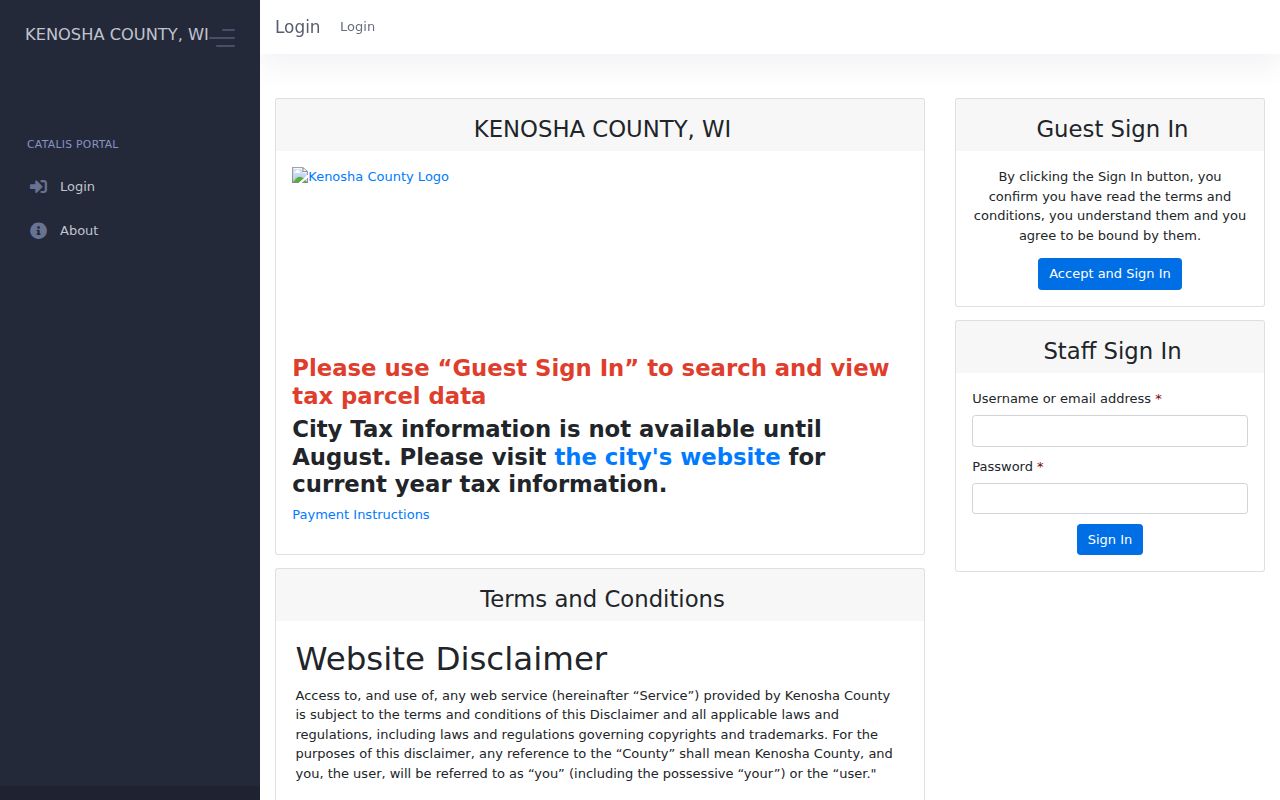
The screen leads to parcel facts, but the deed and custodian record remain the sources to verify ownership.
Kenosha Deed Names Need Context
The LandShark recorded-document portal provides the next link after a parcel is found. A deed index may expose grantor, grantee, recording date, instrument number, document type, legal description, and image availability. A grantor transfers an interest; a grantee receives it. Those roles must be read with the document type. Mortgages, satisfactions, liens, easements, plats, and transfer-on-death instruments can all add names without proving that a sale took place.
The precise online start year is not stated. LandShark may also require an account or payment for searches or images, so the Register of Deeds office remains an essential access channel. Office staff can help locate archived volumes and older material. Most real-estate recordings carry a $30 recording fee, while an office real-estate search is $7. Ordinary copies cost $2 for the first page and $1 for each added page, with $1 added for certification. These are office service charges, not proof that every portal action costs the same.
The LandShark entry point is the county's official route from a parcel to recorded instruments.
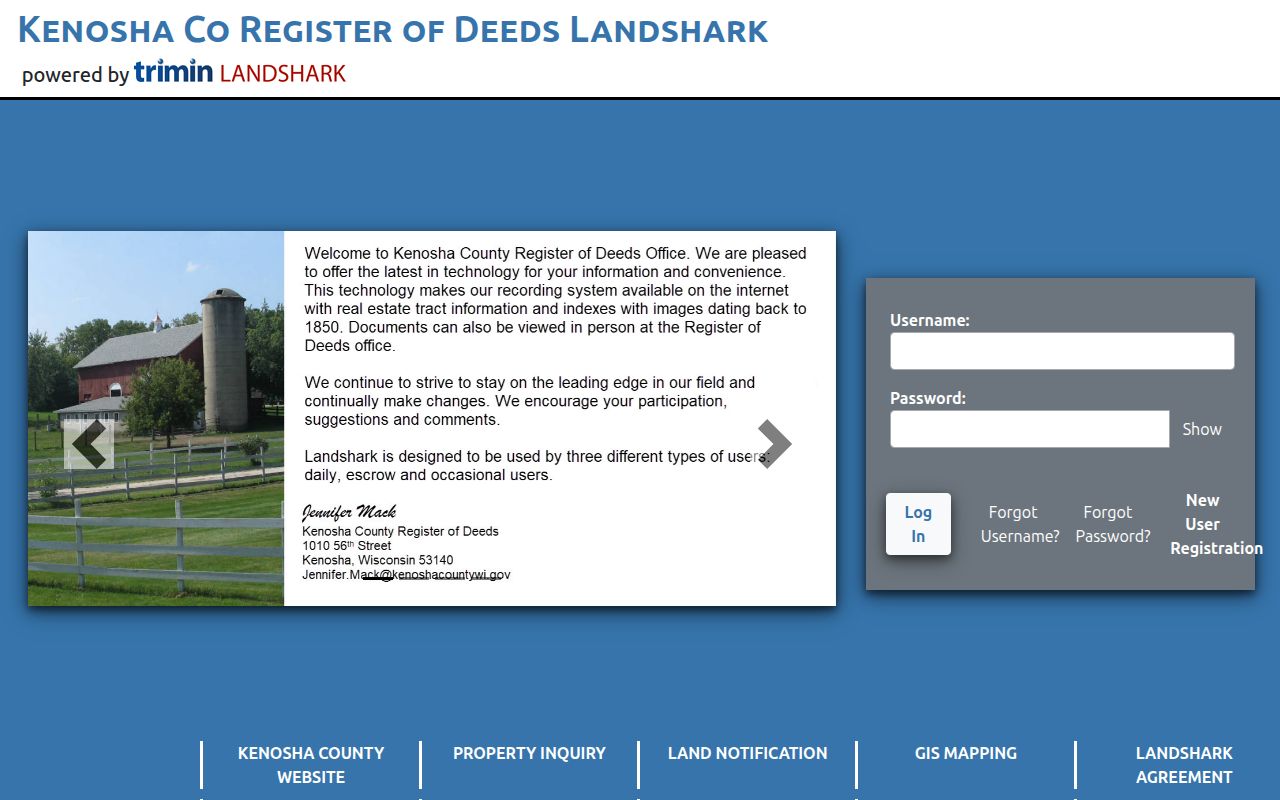
Its index narrows the search; obtaining the image or a certified copy provides the stronger record.
Kenosha Resident Search Terms
Public databases use similar words for different things. Keeping a small glossary prevents an attractive match from turning into a false conclusion.
- Parcel
- A mapped piece of land identified by a tax key; it is not a list of everyone living there.
- Index
- A finding aid with names and record details; the underlying image may need a separate request or fee.
- Roll
- An official list kept for one purpose, such as taxation or elections, with its own inclusion rules.
- Criss-cross directory
- A directory arranged by street and address, allowing a place-first search instead of an alphabetical name search.
Use records lawfully. Kenosha records may support family, property, civic, and personal research. Never use an address or name to stalk, harass, threaten, or harm anyone.
Current Kenosha Residents Directory Sources
Current resident evidence is divided by purpose. Property Inquiry lists parcels and tax-roll ownership. MyVote serves individual voter functions, while Badger Voters supplies paid public election-data files with statutory exclusions. LandShark indexes parties to recorded land documents. WCCA publishes circuit-case summaries, and city departments answer focused requests for permits, code matters, licenses, or municipal citations. None is a universal Kenosha residents directory.
| Kenosha source | Names represented | Custodian | Route |
|---|---|---|---|
| Property Inquiry | Tax-roll owners | Kenosha County | Public address or parcel search |
| MyVote Wisconsin | An individual voter record | Wisconsin Elections Commission | Name and identity or address search |
| Badger Voters | Nonprotected voter-file entries | Wisconsin Elections Commission | Account, estimate, payment, CSV |
| LandShark | Parties to land instruments | Register of Deeds | Online index, image terms, office |
| WCCA | Parties in public circuit cases | Wisconsin court system | Online summary, clerk for documents |
Select the roll by question, then confirm its scope. Someone named on a deed may never have occupied the parcel. A court party may have no current Kenosha connection. Confidential electors and protected voters will not appear in public voter files. When one person is the goal, the Kenosha resident lookup workflow keeps same-name matches and record roles apart.
Kenosha Voter Records Have Boundaries
MyVote Wisconsin supports searches using a first name, last name, and birth date, or an address with city and ZIP details. It can show voter-specific registration and district functions. It is not a public ballot directory. The ballot itself is confidential, and a result should not be treated as a complete list of people at an address.
For a broader, lawful project, Badger Voters is the Wisconsin Elections Commission data-file channel. Filters can include county, municipality, district, status, election, and dates. The service uses an account, estimate, payment, and CSV download. Public fields can include name, registration contact or address data, districts, and participation fields. Dates of birth, driver-license numbers, Social Security numbers, confidential electors, and protected voters are excluded. Contact the Kenosha County Clerk when county election administration or a local file question needs an office response.
The MyVote search page illustrates the narrow identity-based route used for an individual voter inquiry.
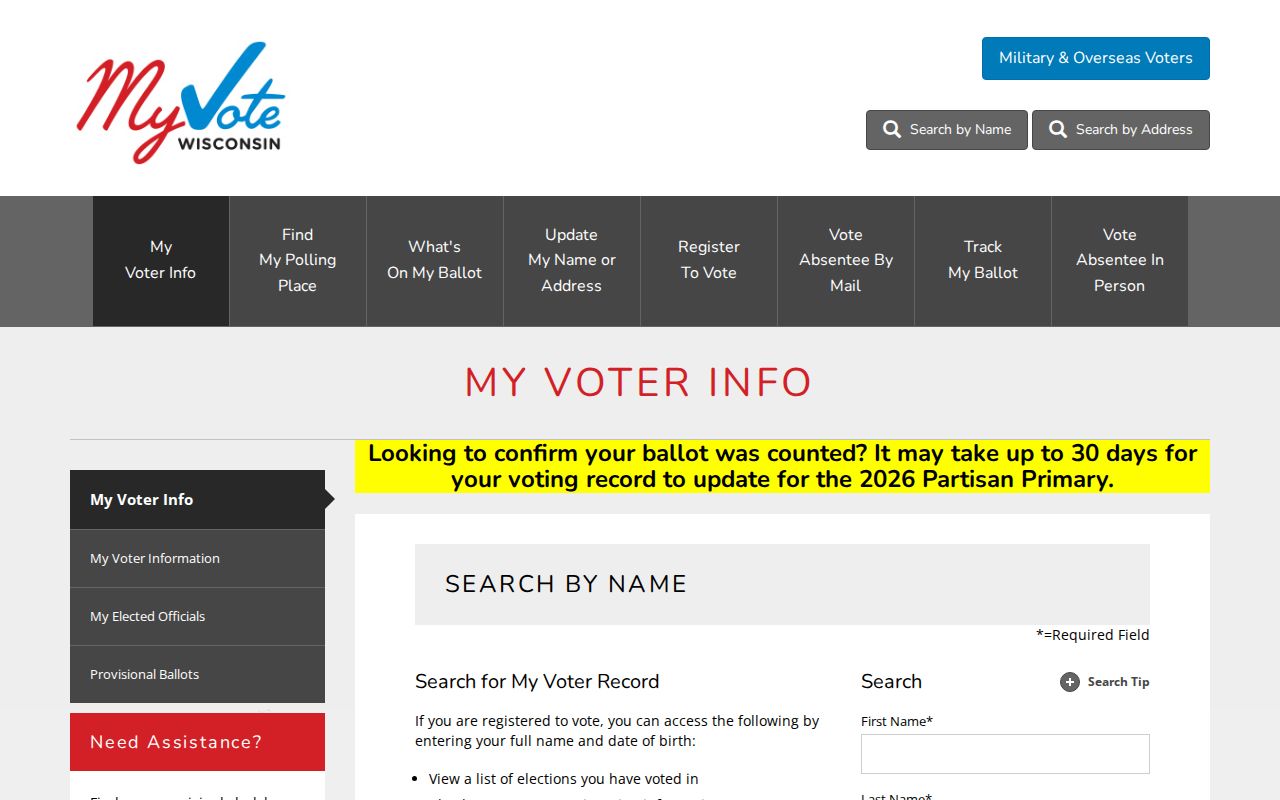
Its form confirms why a name alone is not enough and why confidential records remain outside a public Kenosha directory.
Kenosha Court Names Need Verification
Wisconsin Circuit Court Access is the statewide public index for Kenosha County circuit cases. Search controls include party information, case number, county, case type, and date limits. A result may show the case caption, county, status, filing date, parties, charges or claims, dispositions, court events, and financial summary. It is a docket summary, not the full court file. A docket is the dated list of activity in a case.
Documents must be requested from the Kenosha County Clerk of Courts, subject to sealing, redaction, juvenile restrictions, and other limits. Kenosha Municipal Court uses a separate request form at 625 52nd Street, Room 97. That form asks for up to two defendant names plus a citation or case number, violation date, or hearing date. No unrestricted city name portal was verified. Federal cases use PACER, which requires an account and has its own fees.
Kenosha Vital Records Split Two Ways
Current certified copies and historical index work follow different rules. The Kenosha County Register of Deeds vital-record desk accepts eligible local requests in person and by mail, with online processing during listed weekday windows. Wisconsin Department of Health Services also issues statewide records through application forms. Identity proof and a direct and tangible interest may be required, depending on the record and applicant.
The Wisconsin genealogy route lists a birth index through 1984, death index through 2016, marriage index through May 2015, and divorce index through 1986. Access periods vary by record type. Earlier evidence can also sit in county registers, church records, cemetery lists, newspapers, and archive finding aids. An index hit identifies where to look; it is not the certificate itself.
The county vital-record page shows the official local application and eligibility path.
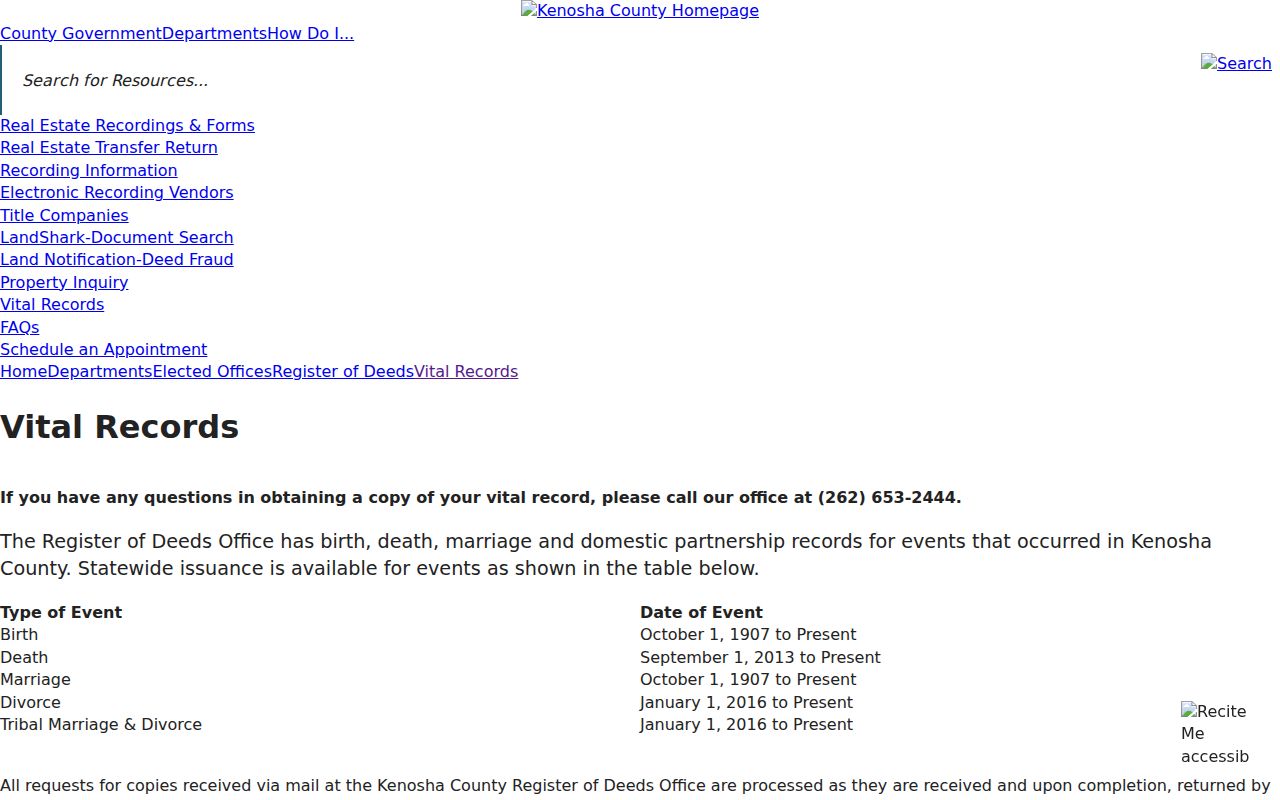
The instructions help a searcher choose between a certified copy, a state request, and historical genealogy research.
Kenosha Records Requests Fill Gaps
Wisconsin Public Records Law, Wis. Stat. §§19.31 through 19.39, begins with a strong presumption of access but permits statutory exceptions, redaction, and a public-interest balancing test. A request works best when it names the custodian, record type, address or case number, and a useful date span. The Wisconsin Department of Justice request guidance explains that a requester generally need not give a reason, while an office may clarify scope and charge allowed location or copy costs.
City property and code research uses one request per address. The Department of Community Development and Inspections form covers current permits, closed permits from 1993, and closed zoning or maintenance cases from 1998. Copies are listed at $0.25 per page, and search time may be charged if it reaches $50. County permits and violations for covered jurisdictions also appear through eTRAKiT. For municipal citations, use the Municipal Court request form. These request routes matter because not every Kenosha residents directory source has a public name index.
Note: Ask for the record, date range, and address you need; a narrow request reduces fees and same-name errors.
Kenosha Official Sources Beat Shortcuts
Commercial people-finder tools may combine old addresses, phone associations, and public snippets. Their speed does not fix stale data, merged identities, or missing context. Official systems are slower because each has a custodian and a defined purpose, but they state where the fact came from and offer a correction or copy route.
| Method | Strength | Limit |
|---|---|---|
| Official Kenosha or Wisconsin record | Named custodian, record role, request channel | May be an index, redacted, or fee-based |
| Library or archive collection | Dated historical evidence and staff help | Gaps, appointments, or in-library access |
| Commercial category | Fast lead gathering | Source and update date may be unclear |
Use any commercial result only as a lead. Recheck the name, address, role, and date with the county, state, library, or archive source before relying on it.
Historical Kenosha Residents Directory Shelves
UW-Parkside's Kenosha directory collection documents a run from 1858 through 2007, with sparse early coverage, odd-year publication patterns, and stated gaps. The Kenosha History Center holds city directories from 1858 through 2000, newspapers, obituaries, maps, cemetery lists, family material, and plat maps. Access to its archives is by appointment. Kenosha Public Library adds licensed genealogy databases, local digital collections, yearbooks, oral histories, and long newspaper runs.
A dated city directory entry can connect a printed name with an address, occupation or business, spouse, and sometimes a telephone. Later criss-cross editions allow the search to begin with a street. Those facts still require interpretation. The listed person may be an occupant or subscriber rather than the parcel owner, and a missing year may reflect a publishing or collection gap. The full year-by-year shelf and reading method are covered in the Kenosha city directory collections.
The Kenosha Public Library genealogy gateway displays the local tools that extend a printed directory find.

Its databases, yearbooks, images, and newspaper access can confirm an earlier household without pretending the sources are current rolls.
Kenosha Address History Changes Searches
Modern numbered streets cannot always be entered directly into an old directory index. Kenosha's 1926 to 1927 renumbering converted many named streets and reassigned numbers. The official crosswalk turns Strong Street into 65th Street, Warren Avenue into 24th Avenue, Washington Street into 4th Avenue, Superior Street into 28th Avenue, and Wisconsin Street into 58th Street. One printed note identifies Third Avenue as formerly Durkee Avenue. These pairs act as a join between newspapers, directory pages, maps, and today's parcel system.
Jurisdiction creates another trap. A Kenosha mailing address can sit in the city, Pleasant Prairie, a neighboring municipality, or a county township. ZIP codes route mail and do not define the city line. Check the municipality field in Interactive Mapping before choosing a permit office, tax system, or records custodian. A missing hit under a modern address should be logged as “not located under this form,” then tested with the old name, old number, parcel key, and legal description.
Kenosha Business Names Are Supporting Clues
A business address or regulated credential can help separate two people with the same name, but it does not establish a home address. The Wisconsin Department of Financial Institutions corporate search may show an entity's legal name, type, effective date, status, registered agent, registered office, principal office, entity ID, filing history, and annual-report year. The system does not provide a complete universe of sole proprietors, trade names, telephone numbers, or domestic LLC members. Wisconsin DSPS separately verifies professional credentials by a person's name or credential number.
The Wisconsin corporate search shows the official entry point for an organization-name check tied to Kenosha.
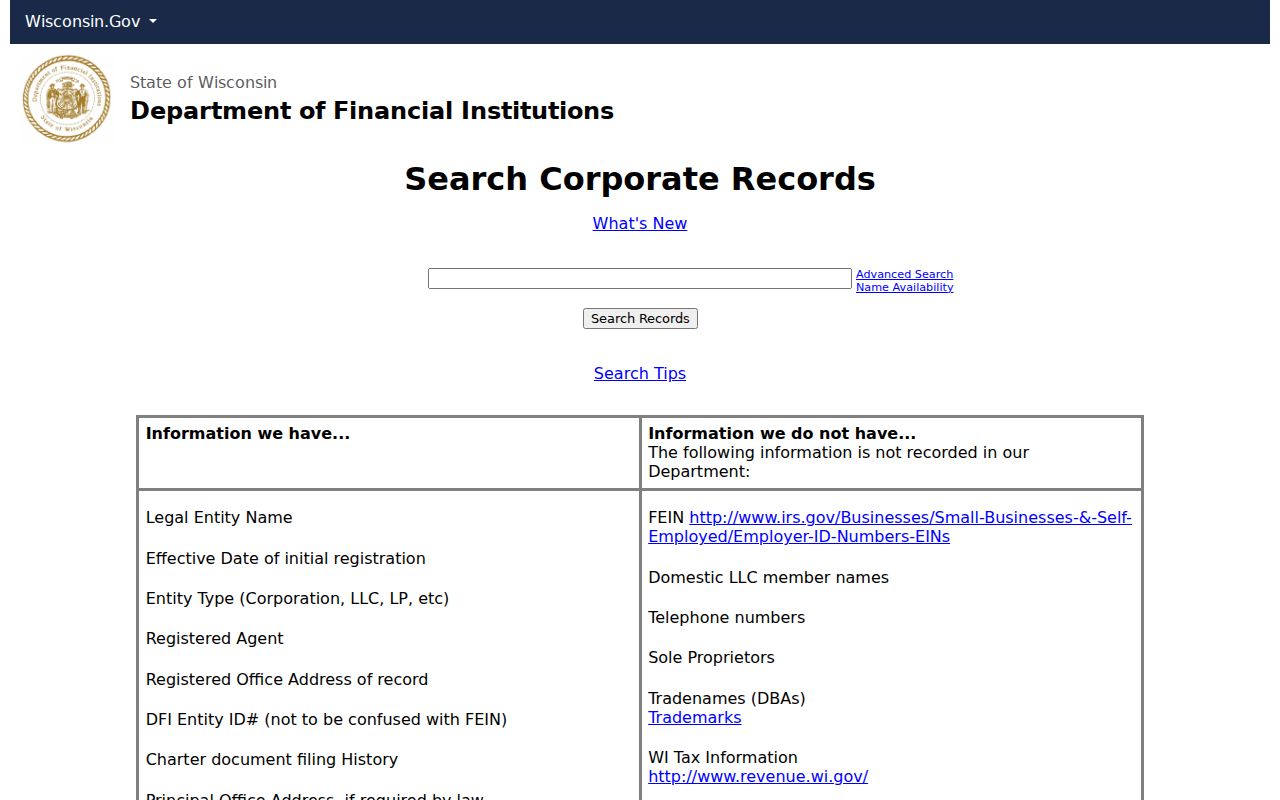
Use the result as dated business evidence, then confirm any person or address through the custodian that holds the relevant resident record.
Another supporting trail is the Wisconsin Unclaimed Property search, which accepts a name or property ID and routes a claimant through address verification.
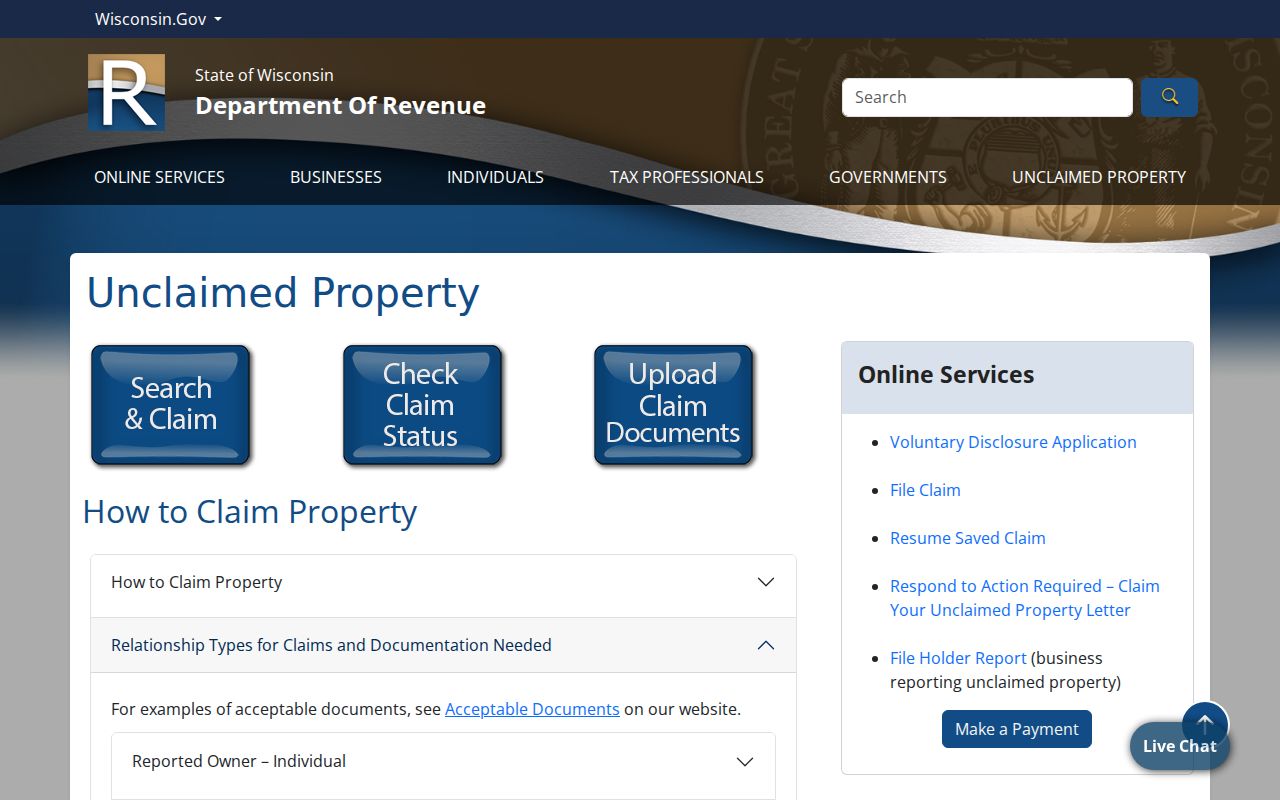
An unclaimed-property hit can suggest an earlier address or name form, but only the claim process and a second source can confirm identity.
Kenosha Safety Systems Cover Narrow Groups
The county jail search, Wisconsin Department of Corrections locator, federal Bureau of Prisons locator, and sex-offender registry cover different groups and update on different schedules. A negative result in one does not prove that no record exists elsewhere. The county Detentions Division is the office route when the linked jail interface does not answer a custody question. State and federal systems must be searched separately.
The Wisconsin Sex Offender Registry supplies its own search controls and strict use warning.
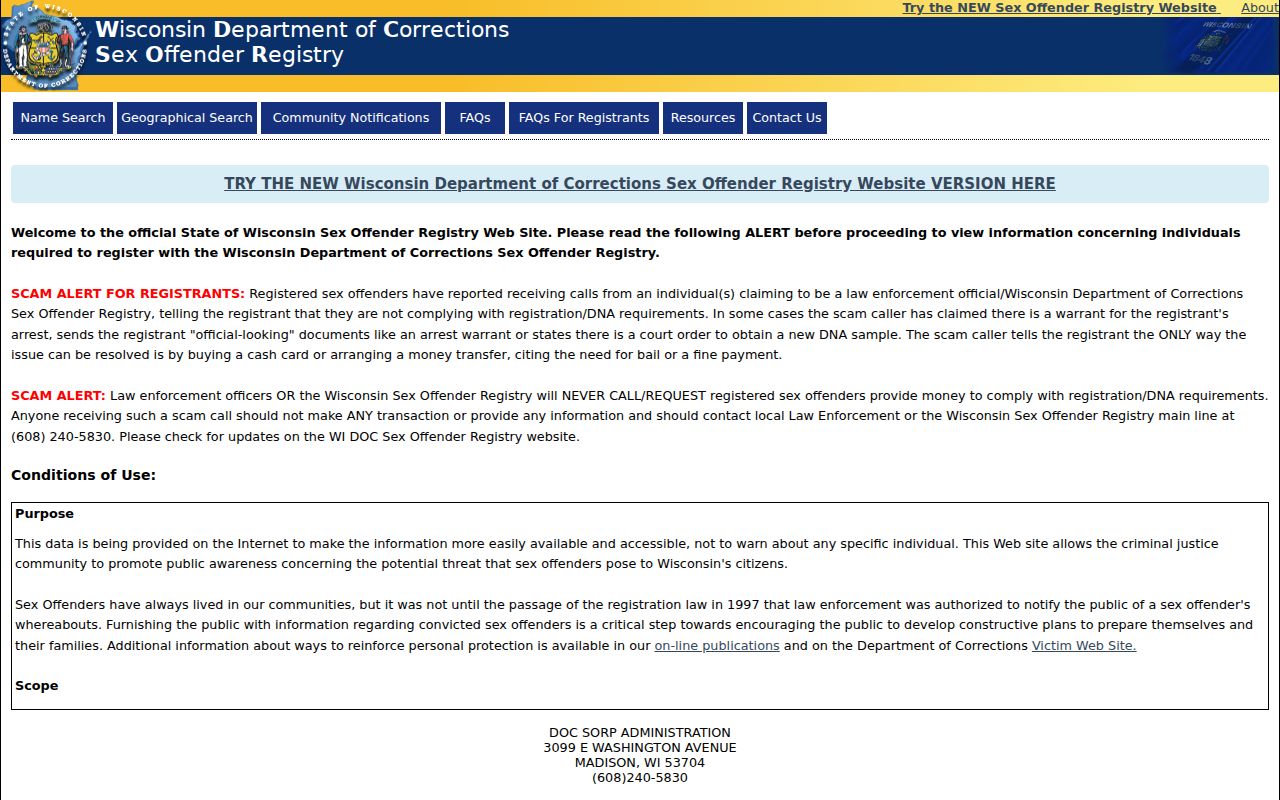
Registry information is a specialized public-safety source, not a general Kenosha directory or a substitute for law enforcement in an emergency.
Kenosha Confidential Residents Stay Protected
Some omissions are deliberate. Wisconsin Safe at Home protects substitute addresses under Wis. Stat. §165.68. Confidential electors are governed by Wis. Stat. §6.47, and judicial privacy protections appear in Wis. Stat. §757.07(2)(a). Voter data files leave out protected categories and sensitive identifiers. Court systems may seal, redact, or restrict records. Vital certificates have identity and interest rules. A responsible Kenosha residents directory search does not try to defeat those protections.
Corrections must go to the source that controls the field. Parcel data questions belong with county Land Information or the tax custodian. A recorded instrument issue goes to the Register of Deeds. Court summary questions go to the Clerk of Courts or the court-system correction route. Voter registration is handled through MyVote and election officials. If an online result disappears, record the system, date, and search terms instead of claiming that no record exists.